Harnessing Creativity: Techniques for Overcoming Creative Blocks
Our brains are wired to respond to patterns, and when faced with a creative task, they draw upon existing knowledge and experiences. However, this can sometimes lead to a mental loop, hindering the generation of new ideas.


19 min read
Creativity is the backbone of innovation, enabling us to devise novel solutions and ideas. However, creative blocks can significantly hinder our ability to think outside the box.
When faced with a blank canvas, many of us struggle to get started, stuck in a cycle of self-doubt and frustration. It’s here that creative thinking techniques come into play, offering a way to break free from the constraints of conventional thinking.
By harnessing the power of creativity, we can unlock new avenues of thought and expression. This article will explore various techniques for overcoming creative blocks, helping you to tap into your full potential.
Key Takeaways
- Understanding the importance of creativity in innovation.
- Recognizing the impact of creative blocks on productivity.
- Exploring effective creative thinking techniques.
- Learning strategies to overcome creative blocks.
- Applying these techniques to enhance personal and professional creativity.
The Science of Creative Blocks and Why They Happen
Creative blocks are not just a product of external pressures but are deeply rooted in our neurological and psychological makeup. Understanding the science behind these blocks can provide valuable insights into how to boost creativity and overcome them.
Our brains are wired to respond to patterns, and when faced with a creative task, they draw upon existing knowledge and experiences. However, this can sometimes lead to a mental loop, hindering the generation of new ideas.
The Neurological Basis of Creative Thinking
Creative thinking involves a complex interplay between different parts of the brain. The default mode network (DMN) is responsible for generating ideas, while the executive control network (ECN) helps in evaluating and refining these ideas. **
Balancing these networks** is crucial for creative productivity.
Common Psychological Triggers of Creative Stagnation
Psychological factors such as fear of failure, perfectionism, and external pressures can significantly impact our creative capacity. Recognizing these triggers is the first step towards developing inspiring creativity methods that work for you.
How Stress and Burnout Impact Creative Capacity
Chronic stress and burnout can deplete our mental resources, making it challenging to access our creative potential. Engaging in stress-reducing activities and maintaining a healthy work-life balance are essential for sustaining creativity.
By understanding the neurological and psychological underpinnings of creative blocks, we can develop targeted strategies to overcome them, ultimately enhancing our creative output.
Identifying Your Personal Creative Obstacles
Identifying personal creative obstacles is a critical step in developing strategies to overcome them and enhance overall creativity. To begin this process, it’s essential to understand the various factors that can impede creative thinking.
Mapping Your Creative Process
Mapping your creative process involves taking a step back to analyze how you approach projects and tasks. By understanding your workflow, you can pinpoint areas where creative blocks tend to occur. This can be done by keeping a journal or using a mind mapping tool to visualize your process.
Self-Assessment Tools for Creative Professionals
Utilizing self-assessment tools can provide valuable insights into your creative strengths and weaknesses. These tools can range from personality tests to creative habit trackers. For instance, a simple questionnaire can help identify patterns in your creative behavior.
Recognizing Patterns in Your Creative Blockages
Recognizing patterns in your creative blockages is crucial for developing targeted strategies to overcome them. This involves identifying common triggers and understanding how different types of blockers affect your creativity.
Emotional Blockers
Emotional blockers can stem from stress, anxiety, or past experiences. Recognizing the emotional triggers that hinder your creativity is the first step towards addressing them.
Cognitive Blockers
Cognitive blockers relate to mental processes that limit your ability to think creatively. This can include fixed mindsets or a lack of diverse perspectives.
Environmental Blockers
Environmental blockers are external factors that can impede creativity, such as a cluttered workspace or lack of natural light. Identifying these factors can help you create a more conducive work environment.
To illustrate the different types of blockers, consider the following table:
| Type of Blocker | Examples | Potential Solutions |
|---|---|---|
| --- | --- | --- |
| Emotional | Stress, anxiety, fear of failure | Mindfulness practices, stress management techniques |
| Cognitive | Fixed mindset, lack of diverse perspectives | Training, seeking out new experiences |
| Environmental | Cluttered workspace, noise pollution | Organizing workspace, using noise-cancelling headphones |
Mindfulness Practices That Unlock Creative Potential
Cultivating mindfulness can be a powerful tool for unlocking creativity, allowing individuals to approach problems with a fresh perspective. By incorporating mindfulness practices into daily routines, creatives can enhance their ability to generate new ideas and solve complex problems.
Five-Minute Meditation Techniques for Busy Creatives
Even a short period of meditation can have a significant impact on creative thinking. **
Five-minute meditation techniques** can help calm the mind, reduce stress, and improve focus. To get started, find a quiet space, close your eyes, and focus on your breath. You can use a guided meditation app or simply pay attention to the sensation of the air entering and leaving your nostrils.
Breathing Exercises to Clear Mental Space
Breathing exercises are another effective way to clear mental clutter and boost creativity. **
Diaphragmatic breathing**, in particular, can help reduce anxiety and promote relaxation. To practice, place one hand on your belly and the other on your chest. Inhale deeply through your nose, allowing your belly to rise while your chest remains still.
Mindful Observation as a Creativity Tool
Mindful observation involves paying close attention to the present moment without judgment. This practice can be applied to various aspects of life, from observing nature to studying the details of a piece of art. By cultivating a mindful approach to observation, creatives can develop a deeper appreciation for the world around them and gain new insights.
The Object Focus Exercise
One effective mindful observation technique is the object focus exercise. Choose an object, such as a flower or a piece of fruit, and observe it closely. Notice its color, texture, shape, and any other details. This practice can help train your mind to focus and appreciate the subtleties of the world.
Sensory Awareness Practice
Sensory awareness involves engaging all your senses to experience the present moment fully. For example, when eating, pay attention to the taste, texture, and smell of your food. This practice can help you become more attuned to your surroundings and potentially uncover new sources of inspiration. For more on nurturing creativity, visit this resource on overcoming creative blocks.
Physical Activities That Stimulate Creative Thinking
The connection between physical activity and creative thinking is becoming a focal point for those seeking innovative solutions. Engaging in various forms of physical activity can significantly impact one’s ability to think creatively and overcome blocks.
The Science Behind Movement and Idea Generation
Research has shown that physical movement can enhance cognitive function, including aspects related to creativity such as idea generation and problem-solving. Exercise promotes blood flow to the brain, boosting the release of neurotransmitters that facilitate creative thinking.
Simple Movement Routines for Creative Breakthroughs
Incorporating simple movement routines into your daily schedule can lead to significant creative breakthroughs. Activities such as stretching, jumping jacks, or even a short dance session can stimulate the mind and foster a more creative state.
Walking Meditation for Problem-Solving
Walking meditation combines the benefits of physical movement with mindfulness techniques, creating an ideal environment for problem-solving. This practice involves paying attention to your surroundings and the act of walking, which can help clear the mind.
Structured Walking Prompts
Using structured walking prompts can further enhance the creative benefits of walking meditation. For example, setting a specific goal to observe a certain number of different colors or textures during your walk can stimulate observation skills.
Urban vs. Nature Walking Effects
The environment in which you walk can also impact the creative benefits. While urban walking exposes you to a variety of stimuli, nature walking has been shown to have a restorative effect on the mind, potentially leading to deeper creative insights.
| Activity | Creative Benefit | Environment |
|---|---|---|
| --- | --- | --- |
| Walking Meditation | Enhanced Problem-Solving | Nature |
| Stretching | Increased Blood Flow | Home/Office |
| Dancing | Stimulated Imagination | Any |
Transforming Your Environment for Enhanced Creativity
A well-designed workspace can be the catalyst for your next creative breakthrough. By transforming your environment, you can significantly enhance your creative output and overcome persistent blocks.
Designing a Workspace That Inspires
Creating an inspiring workspace involves more than just aesthetics; it’s about crafting an environment that stimulates your senses and fosters creativity. Consider incorporating elements that reflect your personality and inspire your work.
- Use personal artifacts or artwork that evoke positive emotions.
- Incorporate plants known to boost creativity and productivity.
- Ensure good lighting that enhances your mood and focus.
The Psychological Impact of Nature on Creative Flow
Nature has a profound impact on our creative abilities. Studies have shown that exposure to natural elements can improve cognitive functioning and boost creativity.
To harness this, consider:
- Bringing in natural elements like wood, stone, or water features.
- Positioning your workspace near a window with a natural view.
- Using nature-inspired colors and patterns in your decor.
Strategic Use of Color, Light, and Sound
The strategic use of color, light, and sound can significantly influence your creative output. Different colors can evoke different emotions and energies.
Creating Mood-Based Work Zones
Designing mood-based work zones can help you transition into different creative states. For instance, a calm zone for focused work and a vibrant zone for brainstorming.
Decluttering for Mental Clarity
A cluttered workspace can lead to a cluttered mind. Regular decluttering and organizing can enhance mental clarity and reduce stress.
For more insights on transforming creative blocks into breakthroughs, check out this episode that delves into practical strategies for overcoming creative stagnation.
Proven Techniques for Overcoming Creative Blocks
When faced with a creative block, it’s essential to have a toolkit of strategies to get back on track. Creative blocks can be daunting, but with the right techniques, you can overcome them and enhance your creative thinking.
Freewriting and Stream of Consciousness Methods
Freewriting involves writing down your thoughts without stopping or worrying about grammar or spelling. This technique helps loosen up your thinking and can lead to unexpected insights. **
Stream of consciousness writing** is similar but involves writing as if you’re thinking out loud on paper.
To practice freewriting, set a timer for 10-15 minutes and write whatever comes to mind. Don’t worry about the content; focus on the flow. This technique can help you tap into your subconscious mind and uncover new ideas.
Visual Brainstorming and Mind Mapping
Visual brainstorming involves using diagrams, charts, and other visual tools to generate ideas. **
Mind mapping** is a specific technique that involves creating a map of your ideas, starting with a central concept and branching out to related ideas.
Time-Boxing with the Pomodoro Technique
The **
Pomodoro technique** involves working in focused, 25-minute increments, followed by a 5-minute break. This technique can help you stay focused and avoid burnout. After four cycles, take a longer break of 15-30 minutes.
| Technique | Description | Benefits |
|---|---|---|
| --- | --- | --- |
| Pomodoro Technique | Work in 25-minute focused intervals | Increased productivity, reduced burnout |
| Freewriting | Write without stopping or editing | Loosens up thinking, generates new ideas |
| Mind Mapping | Create visual maps of ideas | Organizes ideas, reveals connections |
Constraint-based challenges involve working within specific limitations to stimulate creativity. Examples include:
- **
The 30-Circle Exercise:
Draw 30 circles in a minute, then try to turn them into something meaningful.
- **Random Word Association:
Use a random word to inspire a creative project or idea.
- **
Reverse Thinking Method:
Approach a problem from the opposite direction of how you normally would.
The 30-Circle Exercise
This exercise is designed to get you creating quickly and thinking outside the box. By drawing 30 circles in a short time, you’re forced to be creative and make the most of the shapes.
Random Word Association
Using a random word can be a fun way to spark new ideas. You can use online tools or simply pick a word from a dictionary.
Reverse Thinking Method
This method involves flipping your perspective on a problem. Instead of thinking about how to achieve something, think about how to achieve the opposite. This can lead to innovative solutions.
By incorporating these techniques into your creative practice, you can overcome blocks and enhance your overall creative thinking.
Harnessing Collaboration to Break Through Creative Barriers
When facing a creative block, working with others can be the key to unlocking new ideas. Collaboration is a powerful tool that can help individuals overcome obstacles and achieve their creative goals.
Structured Group Brainstorming That Actually Works
Structured group brainstorming is an effective method for generating innovative ideas. To make it work, establish clear objectives and guidelines for the brainstorming session. Encourage wild and creative suggestions without judgment. **Use techniques like mind mapping or free writing to capture ideas.
This approach helps in creating a productive and inspiring environment.
Finding and Engaging with Creative Communities
Engaging with creative communities can provide valuable support and inspiration. Look for online forums, social media groups, or local meetups that align with your creative interests. **
Participate actively by sharing your work and providing feedback to others.
This reciprocal engagement can help you stay motivated and inspired.
The Art of Constructive Creative Feedback
Giving and receiving constructive feedback is crucial in a collaborative environment. It helps refine ideas and improve creative output. Establishing clear feedback protocols is essential for effective communication.
Feedback Protocols for Creative Work
When giving feedback, be specific, objective, and supportive. Focus on the work rather than the person. Use structured feedback forms to ensure consistency.
Virtual vs. In-Person Collaboration
Both virtual and in-person collaborations have their advantages. Virtual collaboration offers flexibility and access to a broader range of participants. In-person collaboration provides immediate feedback and a more personal connection. **
Choose the method that best suits your project’s needs.
| Collaboration Method | Advantages | Disadvantages |
|---|---|---|
| --- | --- | --- |
| Virtual Collaboration | Flexibility, broader participant pool | Potential for miscommunication, lack of personal touch |
| In-Person Collaboration | Immediate feedback, personal connection | Limited by location, less flexible |
Digital Resources and Tools for Creative Inspiration
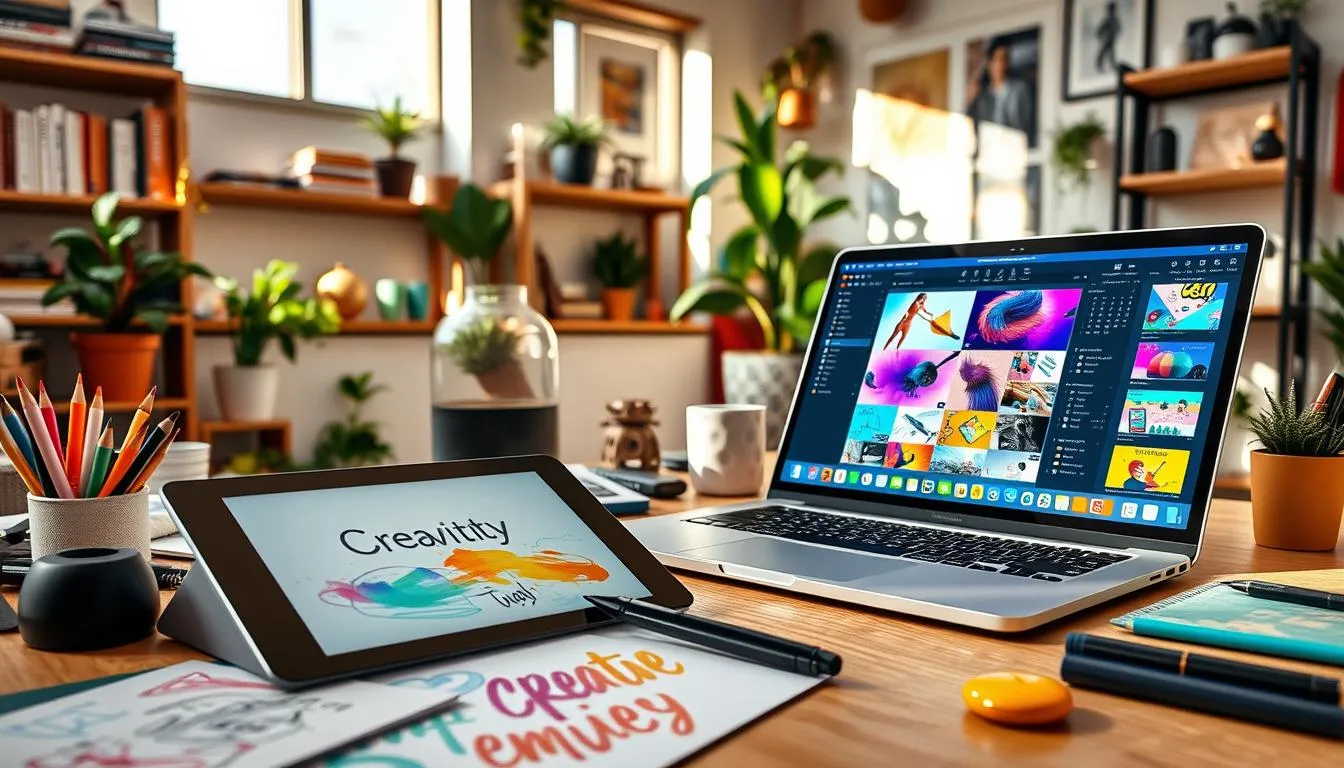
The digital landscape offers a plethora of resources designed to stimulate creativity and overcome blocks. In this era of rapid technological advancement, creatives can tap into a vast array of digital tools to enhance their work.
Apps and Software for Different Creative Disciplines
Various apps and software cater to different creative needs. For instance, graphic designers can use Adobe Creative Cloud, while writers might prefer **
Scrivener** or **
Evernote** for organizing their thoughts. Musicians have tools like **
Ableton Live** for production.
Online Platforms for Creative Exchange and Learning
Online platforms provide opportunities for creatives to exchange ideas and learn from each other. Websites like **
Behance* and Dribbble* allow artists to showcase their work and get feedback. Online courses on platforms like **
Udemy** and **
Skillshare** help creatives develop new skills.
Using AI and Technology as Creative Partners
AI and technology are becoming increasingly important in the creative process. Tools that utilize AI can help generate ideas, automate repetitive tasks, and even collaborate on creative projects.
Prompt Engineering for Creative AI Use
Prompt engineering is a crucial skill for effectively using AI in creative tasks. It involves crafting the right inputs to get the desired outputs from AI tools.
Digital Curation Tools for Inspiration
Digital curation tools help creatives gather and organize inspiration. Platforms like **
Pinterest** allow users to create boards for different projects, while tools like **
Evernote** can be used to save articles, images, and other resources for later reference.
Building Long-Term Creative Resilience
Creative resilience is not just about bouncing back from setbacks; it’s about fostering a sustainable environment for innovation to thrive. Developing this resilience involves a multifaceted approach that includes cultivating a consistent creative practice, learning from failures, and establishing rituals that support artistic expression.
Developing a Sustainable Creative Practice
A sustainable creative practice is built on routine, dedication, and a willingness to adapt. It’s about setting realistic goals and creating a schedule that works for you, not against you. For instance, setting aside a specific time each day for creative work can help in making progress on projects.
Reframing Failure as Creative Fuel
Failure is an inevitable part of the creative process. Instead of viewing it as a setback, creatives can reframe failure as an opportunity to learn and grow. This mindset shift can turn potential discouragement into a driving force for innovation.
Creating Personal Rituals That Support Creativity
Personal rituals can play a significant role in enhancing creativity. By establishing routines that signal the start of creative work, individuals can transition into a more productive mindset. This can include morning creativity routines, practices for creative recovery, and methods for tracking progress.
Morning Creativity Routines
Starting the day with a consistent routine can set a positive tone for creative work. This might involve meditation, journaling, or a short exercise routine to get the creative juices flowing.
Creative Recovery Practices
After a period of intense creative work, recovery is essential. Practices such as taking a walk, practicing yoga, or simply taking time off can help in rejuvenating the mind and body.
Tracking and Celebrating Creative Progress
Keeping track of creative progress, no matter how small, can be a powerful motivator. Celebrating milestones achieved can also provide a sense of accomplishment and encourage continued creativity.
| Creative Ritual | Purpose | Example |
|---|---|---|
| --- | --- | --- |
| Morning Routine | Boosts energy and sets a creative tone | Meditation followed by journaling |
| Creative Recovery | Rejuvenates the mind and body | Yoga or a nature walk |
| Progress Tracking | Motivates continued creativity | Keeping a creative journal |
Conclusion: Your Personalized Path to Creative Flow
Achieving creative flow requires persistence, patience, and practice. By incorporating the strategies outlined in this article, you can develop a personalized approach to overcoming creative blocks and enhance your creative thinking techniques.
Remember, creative blocks are a normal part of the creative process. By adopting mindfulness practices, physical activities, and digital tools, you can stimulate your imagination and stay inspired. Experiment with different techniques to find what works best for you.
Building long-term creative resilience involves reframing failure as creative fuel and creating personal rituals that support your artistic expression. By making creativity a habit, you can maintain a consistent flow of ideas and continue to grow as a creative professional.
Embark on your creative journey with an open mind, and don’t be afraid to try new approaches. With time and dedication, you can cultivate a creative mindset that will help you overcome obstacles and achieve your goals.
FAQ
What are some effective techniques for overcoming creative blocks?
Techniques such as freewriting, visual brainstorming, and time-boxing with the Pomodoro technique can help overcome creative blocks. Additionally, mindfulness practices like meditation and deep breathing can also stimulate creativity.
How can I identify my personal creative obstacles?
To identify your personal creative obstacles, try mapping out your creative process, using self-assessment tools, and recognizing patterns in your creative blockages. You can also explore different types of blockers, including emotional, cognitive, and environmental blockers.
Can physical activity really stimulate creative thinking?
Yes, physical activity can stimulate creative thinking. Movement and exercise have been shown to improve idea generation and problem-solving skills. Simple movement routines, walking meditation, and structured walking prompts can be effective ways to boost creativity.
How can I transform my workspace to enhance creativity?
To transform your workspace, consider designing a space that inspires you, incorporating elements of nature, and using color, light, and sound strategically. Creating mood-based work zones and decluttering your space can also help improve mental clarity and boost creativity.
What role can collaboration play in overcoming creative blocks?
Collaboration can be a powerful tool for overcoming creative blocks. Structured group brainstorming, finding and engaging with creative communities, and giving and receiving constructive feedback can all help stimulate creativity and provide new perspectives.
Are there any digital tools that can help with creative inspiration?
Yes, there are many digital tools that can help with creative inspiration. Apps and software for different creative disciplines, online platforms for creative exchange and learning, and AI-powered tools can all provide new sources of inspiration and help stimulate creativity.
How can I build long-term creative resilience?
To build long-term creative resilience, focus on developing a sustainable creative practice, reframing failure as creative fuel, and creating personal rituals that support creativity. Establishing morning creativity routines, practicing creative recovery, and tracking and celebrating creative progress can also help.
What are some mindfulness practices that can help unlock creative potential?
Mindfulness practices like meditation, deep breathing, and mindful observation can help unlock creative potential. Techniques such as the object focus exercise and sensory awareness practice can also be effective in cultivating mindfulness and stimulating creativity.