Getting Started with Product Development
Effective product development involves a structured approach, incorporating feedback and iteration to refine the product. This not only enhances the product's quality but also ensures it meets the target market's needs.


17 min read
Embarking on a product development journey can be both exciting and daunting for startups and entrepreneurs. Understanding the basics is crucial for turning innovative ideas into successful products.
A beginner’s guide to product design typically covers the essential stages, from market research and ideation to design, development, and testing. By grasping these fundamentals, businesses can navigate the complex process more effectively.
Effective product development involves a structured approach, incorporating feedback and iteration to refine the product. This not only enhances the product’s quality but also ensures it meets the target market’s needs.
Key Takeaways
- Understand the importance of market research in product development.
- Learn how ideation and design contribute to creating a successful product.
- Discover the role of prototyping and user testing in refining a product.
- Recognize the value of iteration in the development process.
- Appreciate the need for a structured approach to product development.
Understanding Product Development Fundamentals
Understanding the basics of product development is crucial for any business looking to innovate and stay competitive. Product development encompasses the entire process of bringing a new product to market, from initial concept to launch.
What Is Product Development?
Product development is a complex process that involves transforming an idea into a tangible product that meets customer needs. It requires a deep understanding of the market, customer needs, and the ability to innovate. As noted by
“The goal is to turn data into information, and information into insight.” - Carly Fiorina
The Importance of Structured Development Processes
A structured development process is essential for ensuring that products are developed efficiently and effectively. It involves several key stages, including concept development, prototyping, testing, and launch. For more insights on product management, visit Product School’s Ultimate Product Management Guide.
| Stage | Description |
|---|---|
| Concept Development | Defining the product concept and initial specifications |
| Prototyping | Creating prototypes to test and refine the product |
| Testing | Conducting user testing to validate the product |
The product development team consists of various roles, each crucial to the success of the product.
Product Managers vs. Product Owners
Product managers are responsible for defining the product vision and strategy, while product owners focus on the product backlog and prioritization. Both roles are vital and often overlap, but they have distinct responsibilities.
Designers, Engineers, and Marketing Specialists
Designers focus on the user experience and product aesthetics, engineers handle the technical development, and marketing specialists develop the go-to-market strategy.
Effective collaboration among these roles is key to successful product development. By understanding product development basics and how to develop a product, businesses can drive innovation and growth.
Product Development Basics: The Essential Stages
The journey from concept to market involves several key stages that are essential for successful product development. Understanding these stages is vital for startups aiming to create a product that meets market needs and stands out from the competition.
The Product Development Lifecycle Overview
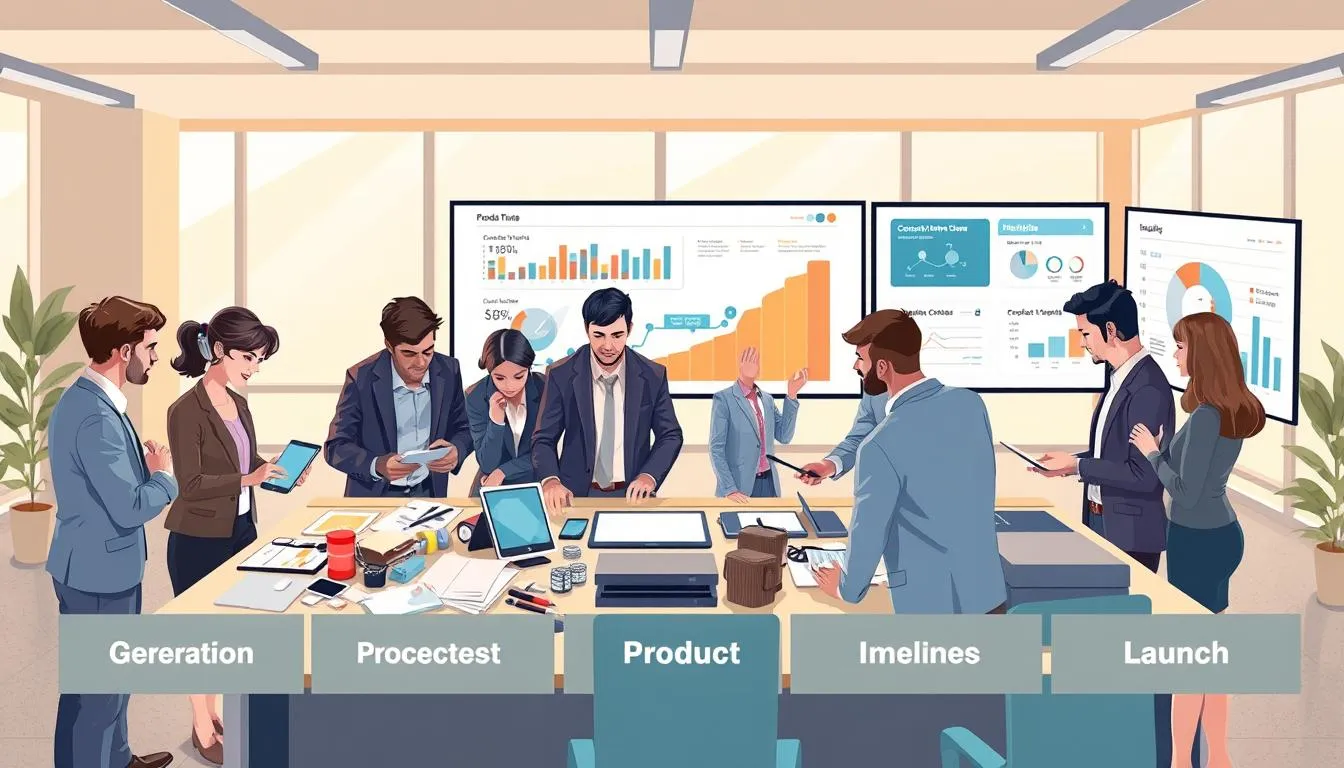
The product development lifecycle encompasses all stages from initial concept to market launch. It includes ideation, design, prototyping, testing, and iteration, followed by production and launch. Each stage is crucial and builds upon the previous one, ensuring a well-rounded and market-ready product.
From Concept to Market: A Roadmap
A successful product development process requires a clear roadmap. This roadmap outlines the key milestones and deliverables at each stage, ensuring that the development process stays on track. It involves market research, customer feedback integration, and agile development methodologies to adapt to changing market conditions.
Agile vs. Waterfall Development Methodologies
Two popular development methodologies are Agile and Waterfall. Agile is iterative and flexible, allowing for changes at various stages. Waterfall is more linear and sequential, with distinct phases that follow one another.
When to Use Each Approach
The choice between Agile and Waterfall depends on the project’s requirements and the team’s experience. Agile is suitable for projects with unclear or evolving requirements, while Waterfall is better for projects with well-defined and stable requirements.
By understanding the essential stages of product development and choosing the right methodology, startups can streamline their development process, reduce risks, and increase their chances of success in the market.
Identifying Market Opportunities
The key to a successful product launch lies in understanding your market opportunities. To achieve this, you need to conduct thorough market research, analyze customer needs, and evaluate the competitive landscape.
Conducting Market Research
Market research is foundational in identifying market opportunities. It involves gathering data about your target audience, understanding their needs, and analyzing the competitive landscape.
Primary vs. Secondary Research Methods
Primary research involves collecting data directly from sources, such as through surveys or focus groups. Secondary research, on the other hand, involves analyzing existing data from sources like industry reports or academic studies.
Analyzing Customer Needs and Pain Points
Understanding customer needs and pain points is crucial. It helps in developing products that meet customer expectations and solve their problems.
Evaluating Market Size and Potential
Assessing the size and potential of your target market is vital. It helps determine whether your product can achieve the desired scale and profitability.
Competitive Analysis Techniques
Analyzing your competitors involves understanding their strengths, weaknesses, and market strategies. This helps in positioning your product effectively.
| Competitor | Strengths | Weaknesses |
|---|---|---|
| Competitor A | Strong brand presence | Limited product offerings |
| Competitor B | Innovative products | High pricing |
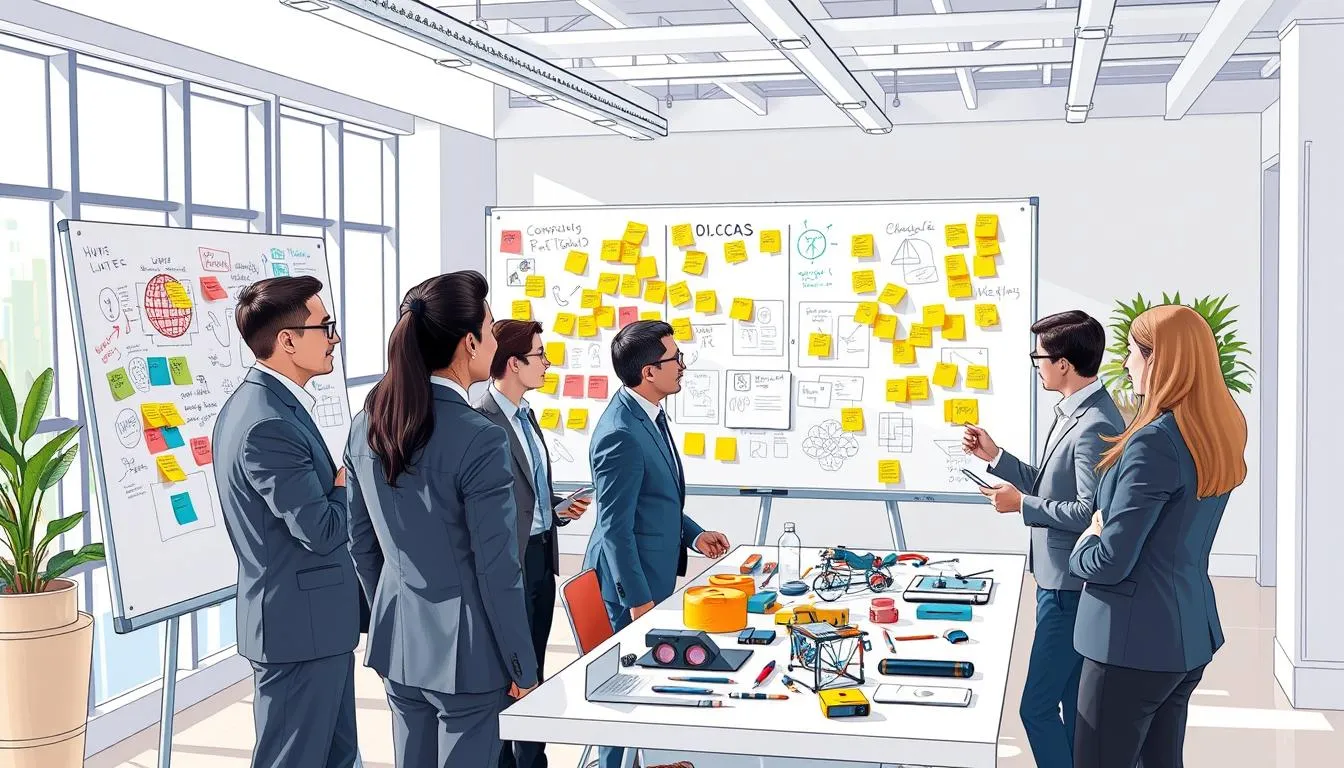
The journey from concept to market begins with ideation, a critical phase that sets the stage for product success. Ideation involves generating, evaluating, and refining ideas to create a product that meets customer needs and stands out in the market.
Brainstorming Techniques for Product Ideas
Brainstorming is a powerful technique for generating a wide range of product ideas. It involves gathering a diverse team to share thoughts and build on each other’s suggestions. Techniques such as mind mapping, SCAMPER (Substitute, Combine, Adapt, Modify, Put to Another Use, Eliminate, and Rearrange), and reverse brainstorming can stimulate creativity and lead to innovative ideas.
Evaluating and Prioritizing Concepts
Once ideas are generated, they must be evaluated and prioritized. This involves assessing the potential of each concept based on various criteria.
Feasibility, Viability, and Desirability Framework
A useful framework for evaluating concepts is the feasibility, viability, and desirability framework. Feasibility refers to the technical feasibility of the product, viability concerns the business case and financial sustainability, and desirability focuses on whether the product meets customer needs and is appealing to the target market.
| Criteria | Description | Importance Level |
|---|---|---|
| Feasibility | Technical feasibility of the product | High |
| Viability | Business case and financial sustainability | High |
| Desirability | Meeting customer needs and market appeal | High |
After prioritizing concepts, the next step is to create initial product specifications. This involves defining the product’s features, functionalities, and performance requirements. It’s essential to involve stakeholders from various departments to ensure that the specifications are comprehensive and realistic.
Developing a Minimum Viable Product (MVP)
An MVP is a version of the product that includes only the most essential features, allowing for testing and validation with minimal resources. Developing an MVP is crucial for gathering feedback from early adopters and iterating towards a more refined product.
Building a Product Strategy
A well-crafted product strategy serves as the backbone for any successful product development process. It guides the entire lifecycle of a product, from conception to launch, ensuring that it meets customer needs and stays competitive in the market.
Defining Your Value Proposition
Your value proposition is the unique benefit that your product offers to customers. It’s essential to clearly define this proposition to differentiate your product from competitors. For instance, a product that solves a specific pain point or offers a new feature can be a compelling value proposition.
Setting Product Goals and Objectives
Setting clear goals and objectives is vital for measuring the success of your product. These goals should be specific, measurable, achievable, relevant, and time-bound (SMART). For example, increasing market share by 10% within the first year is a SMART goal.
Positioning Your Product in the Market
Understanding your target audience and how your product fits into the market is crucial. This involves analyzing customer needs, market trends, and competitor activity to position your product effectively.
Creating a Product Roadmap
A product roadmap outlines the future development and evolution of your product. It includes both short-term and long-term plans.
Short-term vs. Long-term Planning
Short-term plans focus on immediate needs and quick wins, while long-term plans look at the overall product vision and strategy. Balancing both is essential for sustained success.
Funding and Budgeting for Product Development
Effective product development hinges on proper funding and budgeting. Without a well-planned financial strategy, even the most innovative products can fail to reach the market.

Estimating Development Costs
Accurately estimating development costs is crucial for creating a realistic budget. This involves considering various factors such as research and development expenses, production costs, and marketing expenditures. For a comprehensive guide on budgeting, you can refer to resources like Corporate Finance Institute.
Funding Options for Startups
Startups have several funding options, including venture capital, angel investors, crowdfunding, and loans. Each option has its pros and cons, and the choice depends on the startup’s specific needs and circumstances.
Managing Budget Constraints
Managing budget constraints requires careful planning and prioritization. It’s essential to identify areas where costs can be optimized without compromising the product’s quality or marketability.
Return on Investment Calculations
Calculating the return on investment (ROI) is vital to understanding the financial viability of a product. ROI calculations help in making informed decisions about product development and marketing strategies.
By focusing on these financial aspects, businesses can ensure that their product development process is not only innovative but also financially sustainable.
Prototyping Your Product
Prototyping is a crucial step in product development, allowing startups to visualize and test their ideas. This process enables entrepreneurs to refine their product’s features, identify potential issues, and make necessary adjustments before moving to full-scale production.
Types of Prototypes: From Low to High Fidelity
Prototypes can range from low-fidelity, simple sketches or wireframes, to high-fidelity, fully interactive models that closely resemble the final product. Low-fidelity prototypes are useful for early-stage feedback, while high-fidelity prototypes are better suited for user testing and validation.
Rapid Prototyping Methods and Tools
Rapid prototyping involves quickly creating and iterating prototypes using various tools and methodologies. Techniques such as 3D printing, digital modeling, and agile development enable startups to swiftly test and refine their products. For more information on why designers make prototypes, visit this resource.
Testing and Iterating Prototypes
Testing prototypes with real users provides valuable feedback that can be used to iterate and improve the product. This iterative process is crucial for ensuring that the final product meets user needs and expectations.
User Feedback Collection Techniques
Collecting user feedback effectively is vital for the success of the prototyping process. Techniques such as surveys, interviews, and usability testing can provide insights into user preferences and pain points, helping startups refine their product.
Product Design and Development
Product design and development are intertwined processes that require careful planning and execution. A well-designed product not only meets customer needs but also stands out in a competitive market.
User-Centered Design Principles
User-centered design is a methodology that puts the needs and wants of the user at the forefront. It involves understanding the target audience, their pain points, and preferences to create a product that is intuitive and enjoyable to use. Methods for improving product service design can be applied to enhance user experience.
Technical Specifications and Requirements
Defining technical specifications is a critical step in product development. It involves outlining the product’s features, functionalities, and performance metrics. This stage ensures that the product meets the required standards and is feasible to manufacture.
Design for Manufacturing Considerations
Design for manufacturing (DFM) is a set of principles aimed at designing products that are easy and cost-effective to manufacture. DFM considerations include simplifying product designs, reducing the number of parts, and selecting appropriate materials.
| DFM Principle | Description | Benefit |
|---|---|---|
| Simplify Design | Reduce complexity by minimizing parts | Lower production costs |
| Material Selection | Choose materials that are readily available and cost-effective | Reduced material costs |
Collaboration with development teams is essential for successful product development. Teams can be structured in-house or outsourced, each with its pros and cons.
In-house vs. Outsourced Development
In-house development offers control and direct oversight, while outsourced development can provide access to specialized skills and reduce costs. The choice between the two depends on the company’s resources, expertise, and strategic goals.
“The key to successful product development lies in striking the right balance between design, functionality, and manufacturability.”
鈥?Product Development Expert
By understanding and applying these principles, businesses can create products that are not only appealing to customers but also efficient to produce and maintain.
Testing and Quality Assurance
Testing and quality assurance are pivotal in the product development process. A robust testing strategy ensures that the product meets the required standards and is free from defects.
Creating a Testing Strategy
Developing a comprehensive testing strategy involves identifying the types of tests needed, such as unit tests, integration tests, and user acceptance tests. It’s essential to prioritize testing based on risk and impact.
User Testing Methodologies
User testing methodologies, including A/B testing and usability testing, help in understanding how real users interact with the product. This feedback is invaluable for making necessary improvements.
Addressing Quality Issues
Identifying and addressing quality issues promptly is crucial. This involves implementing a defect tracking system and ensuring that all defects are resolved before the product launch.
Regulatory Compliance and Standards
Ensuring regulatory compliance is vital. This includes adhering to industry-specific requirements. For instance, in the software industry, compliance with standards outlined in resources like quality assurance guides is essential.
Industry-Specific Requirements
Different industries have unique regulatory requirements. For example, healthcare products must comply with FDA regulations, while financial products must adhere to specific financial regulations.
By focusing on these aspects, businesses can ensure their products are not only of high quality but also compliant with relevant regulations, thereby enhancing customer trust and satisfaction.
Preparing for Product Launch
Preparing for a product launch involves several strategic decisions that can impact your product’s success. As you near the culmination of your product development journey, it’s essential to focus on the final stages that will make or break your market entry.
Creating a Go-to-Market Strategy
A go-to-market strategy is a comprehensive plan that outlines how you will launch your product to the market, reach your target audience, and achieve a competitive advantage. It involves understanding your customer segments, defining your unique selling proposition (USP), and determining the most effective marketing channels.
Pricing Strategies for New Products
Pricing is a critical element of your product launch strategy. You need to consider various pricing models, such as penetration pricing, skimming, or value-based pricing, to determine which best suits your product and target market. The goal is to set a price that is competitive, yet profitable.
Marketing and Promotion Planning
Effective marketing and promotion are vital for creating buzz around your product launch. This includes leveraging digital marketing channels, social media, content marketing, and potentially, traditional advertising methods. Your marketing plan should be tailored to your target audience and aligned with your overall business objectives.
Distribution Channel Selection
Choosing the right distribution channels is crucial for ensuring that your product reaches your target customers efficiently. You may consider direct sales, online marketplaces, retail partnerships, or a combination of these, depending on your product and market.
Launch Timeline Development
Creating a detailed launch timeline helps in organizing and executing the launch plan effectively. It involves setting milestones, deadlines, and responsibilities for team members, ensuring that everyone is aligned and working towards the launch date.
| Launch Activity | Timeline | Responsible Team |
|---|---|---|
| Finalize Go-to-Market Strategy | Weeks 1-2 | Marketing Team |
| Pricing Strategy Decision | Week 3 | Product Management |
| Marketing Campaign Launch | Weeks 4-6 | Marketing Team |
| Distribution Channel Setup | Weeks 5-8 | Sales and Logistics |
| Product Launch | Week 8 | All Teams |
Conclusion: Building a Sustainable Product Development Process
Developing a successful product requires a well-structured process that incorporates market research, ideation, prototyping, and testing. As outlined in this startup product guide, understanding the fundamentals of product development is crucial for creating a product that meets customer needs.
To build a sustainable product development process, startups must be willing to iterate and improve their strategies continuously. This involves refining their understanding of customer pain points, staying up-to-date with market trends, and leveraging the latest development methodologies.
By following the principles outlined in this guide on how to develop a product, startups can create a product that is not only viable but also scalable and sustainable in the long term. This requires a commitment to ongoing improvement and a willingness to adapt to changing market conditions.
Ultimately, a well-executed product development process is key to driving business success and staying competitive in today’s fast-paced market.
FAQ
What is product development, and why is it crucial for startups?
Product development is the process of creating a new product or improving an existing one. It’s essential for startups as it enables them to bring innovative solutions to the market, meet customer needs, and stay competitive.
What are the key stages in the product development lifecycle?
The product development lifecycle typically includes stages such as concept development, design, prototyping, testing, and launch. Understanding these stages helps startups navigate the development process effectively.
How do I choose between Agile and Waterfall development methodologies?
The choice between Agile and Waterfall depends on your project’s complexity, team size, and customer needs. Agile is suitable for projects with changing requirements, while Waterfall is better for projects with well-defined, stable requirements.
What is the role of market research in product development?
Market research helps identify customer needs, preferences, and pain points, enabling startups to develop products that meet market demands. It involves primary and secondary research methods, such as surveys, interviews, and competitor analysis.
How do I estimate development costs for my product?
Estimating development costs involves considering factors such as technology stack, team size, and project complexity. Startups can use cost estimation tools, consult with experts, or analyze similar projects to determine costs.
What is a Minimum Viable Product (MVP), and why is it important?
An MVP is a product version with just enough features to satisfy early customers and gather feedback. It’s crucial for startups as it allows them to test assumptions, validate product ideas, and iterate towards a better product.
How do I create a product roadmap, and what’s its significance?
A product roadmap outlines the product’s vision, goals, and milestones. It’s created by defining the product’s value proposition, setting objectives, and prioritizing features. A product roadmap helps teams stay focused, aligned, and on track.
What are the key considerations for product design and development?
Key considerations include user-centered design principles, technical specifications, design for manufacturing, and collaboration with development teams. Startups should also consider in-house vs. outsourced development and ensure regulatory compliance.
How do I prepare for a successful product launch?
Preparing for a product launch involves creating a go-to-market strategy, pricing strategies, marketing planning, distribution channel selection, and launch timeline development. Startups should also focus on testing and quality assurance to ensure a smooth launch.